
.svg)


ADHD assessment?
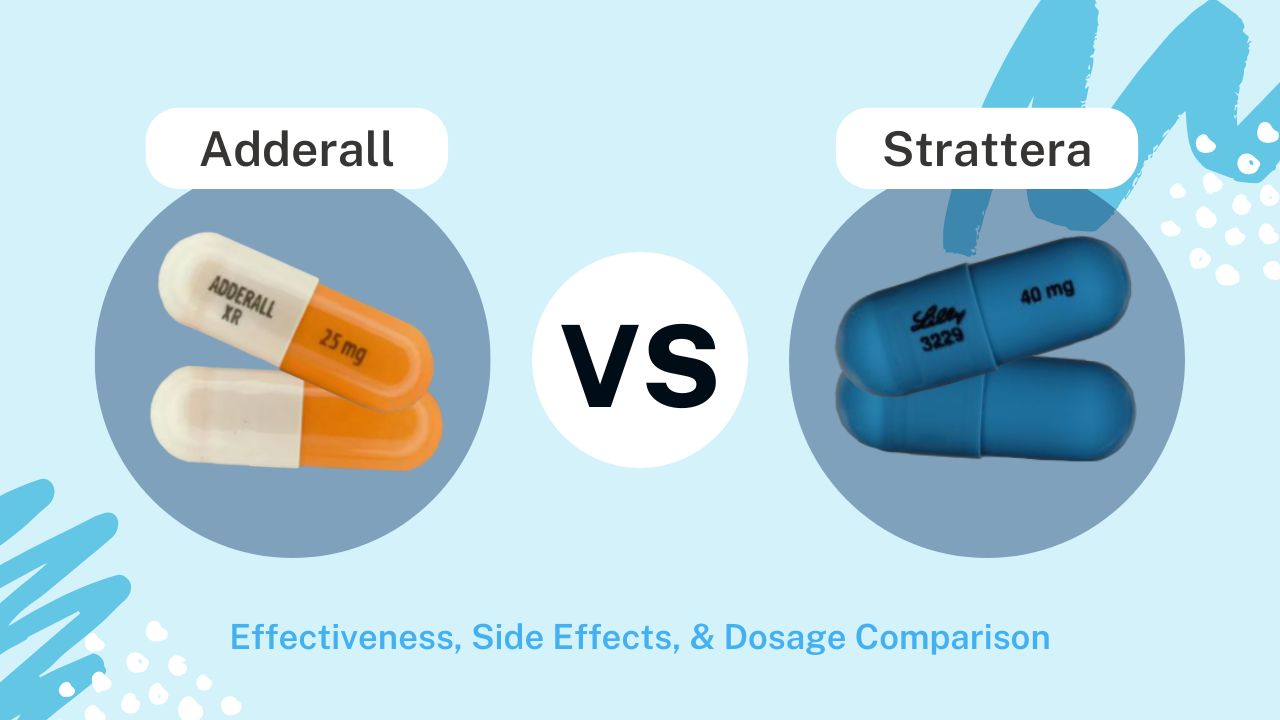
- Adderall is a Schedule II stimulant that boosts both dopamine and norepinephrine, producing fast-acting focus within 20, 60 minutes, while Strattera is a non-stimulant that raises norepinephrine only, building gradually over 2, 4 weeks with no abuse potential.
- Adderall tends to work better when you need immediate, flexible productivity support, while Strattera is often the stronger choice if you have comorbid anxiety, a history of substance misuse, or need steady 24-hour coverage without peaks and crashes.
- Side effects differ in meaningful ways: Adderall carries a higher risk of rebound crashes, mood swings, and worsened anxiety, while Strattera more commonly causes nausea early on, and its effectiveness can vary significantly based on how quickly your body metabolizes it via the CYP2D6 gene.
- Neither medication is a guaranteed fix, and individual response varies widely, two people on the same Strattera dose can have completely different experiences, which is why titration and ongoing provider follow-up are essential parts of finding what works. Start My Screening
Why Compare Adderall and Strattera?
Most ADHD treatment guides focus on the differences between different stimulants — but what if a stimulant isn’t for you at all? Maybe Adderall helps you focus, but spins into anxiety, leaving you with restless nights where overthinking takes over. Or maybe you’re taking Straterra for the “gentler” effects but are three weeks in, wondering if it’ll ever kick in.
This guide breaks down the real decision points you face when choosing between the two:
- Speed vs stability
- Dopamine vs no dopamine
- Appetite changes, mood dips, cost
- How your day actually goes on these meds
Think of this as the side-by-side comparison you wish your psychiatrist had time to walk through.
Adderall vs. Strattera: What Are They?
Adderall is one of the most famous ADHD meds. It’s an FDA-approved stimulant that’s been around since the 90s, and often, the first medication a clinician would have you start with. It works by boosting both your dopamine and norepinephrine, which helps you focus, start tasks, and stay motivated. Here’s a quick breakdown:
- Type: Stimulant (mixed amphetamine salts)
- How it works: Boosts dopamine and norepinephrine
- Formats: Immediate-release (IR), extended-release (XR)
- Timing: Fast-acting (20-60 minutes)
- Schedule II controlled substance with high risk of dependency: Yes
Strattera, on the other hand, is not a stimulant, making it a great option for people with Adderall side effects or dependency risks. It’s a selective norepinephrine reuptake inhibitor (SNRI). That means it more gently increases your norepinephrine levels over time. This leads to better attention and impulse control, without the quick highs or crashes of stimulants.
Quick facts about Strattera:
- Type: Non-stimulant
- How it works: Increases norepinephrine only
- Formats: Daily capsule
- Timing: Builds gradually (2-4 weeks)
- Controlled substance with high risk of dependency: No
Key Differences Between Adderall and Strattera
Here are the basics of what to know when you’re first considering ADHD medication (or wondering whether it’s time to switch):
Adderall vs. Strattera for ADHD Effectiveness
The main question we all want to know is: Which one works better?
Of course, there’s no “right” answer because we all have incredibly different responses and needs. No one can say for certain how a medication will affect you. For example, a brand name vs a generic version of the same drug can even lead to different side effects. There’s a basic educational prediction, but trial and error is always a part of the game.
Here are the stats behind how effective each one is, on average:
Adderall
- High response rate
- Helps with focus, motivation, and task initiation
- Good for both inattentive and hyperactive presentations
- Ideal when you need predictable, immediate performance
Strattera
- Best for inattentive ADHD, emotional regulation, and anxiety
- Response rate is lower but still solid, especially in new cases
- No “on/off” feeling
- No abuse potential
Why Your Genotype Matters with Strattera
Strattera’s effectiveness and side effects can vary more because your genetics change how quickly you break down the medication. The key gene here is CYP2D6, which acts like your body’s “speed setting” for processing atomoxetine (the active ingredient).
If you’re a ‘slow metabolizer’ (few or no working copies of the gene), Strattera hangs around longer and hits harder — meaning higher blood levels, stronger effects, and potentially more nausea or fatigue.
If you’re a ‘fast metabolizer’ (extra-active gene copies), you may feel almost nothing until the dose is increased. That’s why two people can start the same 40 mg dose and have totally different experiences.
Most adults are normal metabolizers, so the medication processes just as the FDA label expects.
Adderall vs. Strattera Side Effects
Each med will come with some side effects. Some may be short-term, others can hang around as long as you’re taking the med. So, on top of asking “Which med has fewer side effects?” you may also want to ask: “Which side effects matter most to my day?” For example, better sleep, appetite, anxiety, focus time, or emotional swings. It’s something you’ll have to speak to your clinician about, giving them your full list of concerns and needs.
Physical Side Effects
Here are some of the most common physical side effects people notice:
Learn more about the side effects of Adderall.
Mood and Emotional Side Effects
When it comes to the emotional side, here’s what people say:
Adderall vs. Strattera for Weight Loss
Both meds can affect your appetite and lead to unintentional weight loss. Stimulants like Adderall are known to suppress appetite strongly, where people often forget to eat. Strattera can be milder, but potentially stronger in the early weeks if you get the temporary side effect of nausea.
Either way, neither med is approved for weight loss. Vyvanse is different, where it’s FDA-approved for binge eating disorder and ADHD. However, it’s also not meant for weight loss — it’s to help manage a severe mental health condition.
If you’re looking for a weight loss aid, consider ADHD therapy and health coaching to gain tools and insight. Many people with ADHD struggle with emotional eating and use food as a coping tool, or feel too stuck to change health behaviors. Fortunately, accountability and developing tools and systems to manage stress and build healthier habits can last long after meds wear off.
Adderall vs. Strattera Dosage and Onset Timeline
Since Straterra isn’t a stimulant, it works quite differently from Adderall. It can take some time before you notice its effects, whereas Adderall can hit you shortly after taking it. Strattera has to be taken daily for a consistent effect, but Adderall can be adjusted or skipped. Here’s how they differ:
Adderall vs. Strattera: Price and Insurance Coverage
One of the biggest factors behind choosing a medication has to do with cost and availability. Here’s what you can expect:
Overall, Adderall tends to be cheaper, but shortages and insurance quirks can flip the equation.
How to Choose the Right ADHD Medication
There’s not exactly a “right” medication. Start with asking, “What’s the tiniest change I need from medication right now?” Fewer crashes? Better mornings? Calmer evenings? Your answer might point clearly to one medication.
Here are the decision points most providers use:
Choose Adderall if you:
- Need fast results
- Do well on stimulants
- Need strong productivity support
- Don’t have anxiety that worsens on stimulants
Choose Strattera if you:
- Have anxiety
- Can’t tolerate stimulants
- Have a personal/family history of substance misuse
- Want 24-hour stability without spikes and drops
Reddit and User Reviews: What People Say
Everyone’s going to have different experiences overall, since our biochemistry and needs are all so unique. Here are some common themes, though, that people may notice:
Adderall:
- Works fast — can usually focus within an hour
- Too much anxiety or jitters
- Flexible dosing depending on how your workday is
Strattera:
- Steadier focus (once it kicks in)
- Fewer mood swings and anxiety
- No rebound crashes like Adderall
Some comments you may see on Reddit include:
“I'm on Strattera (which is atomoxetine). It hasn't done a ton for my executive dysfunction ADHD symptoms, but it's been a HUGE help for my comorbid depression and anxiety problems. My mood swings have really calmed down, my suicidal intrusive thoughts have disappeared, and I can turn my brain off of endless ruminating on worries way more easily than I used to. My brain still won't shut up for anything, but it's a less overtly harmful place to be stuck in than it was.”
“All Strattera did for me was make me sweat a ton. No notable benefits. I’m prescribed adderall now and feel like my emotions are easier to control, my train of thought might be on two or three tracks instead of twenty, I feel like I can speak coherently. I’m calm.”
“In my experience, stimulants are better if you need to make big changes in your life. And atomoxetine is better if you need emotional regulation or cope with ongoing situations.”
As you can see, two people can say completely different things about each med. It really is an individual experience that you need to dive into with your prescribing clinician.
ADHD Advisor Can Help You Decide
Medication decisions shouldn’t feel like complete guesswork. ADHD Advisor connects you with licensed clinicians who can:
- Review your ADHD history and subtype
- Compare stimulant vs non-stimulant options
- Monitor side effects and titration
- Offer ongoing coaching and therapy referrals
There are plenty of ADHD treatment options out there, but figuring out what works for you can be easiest when you have a professional by your side.
FAQs
Is Strattera better than Adderall for anxiety?
Often yes. It doesn’t trigger the same dopamine-driven anxiety many people feel on stimulants.
How long does it take for Strattera to work?
2–4 weeks to start, sometimes longer. Some studies say after 6 months you’ll notice the full effects.
Can I switch from Adderall to Strattera?
Yes, especially if you're having side effects or need a non-stimulant. Your provider will guide the taper/switch.
Is Strattera weaker than Adderall?
Not weaker — just different. Slower onset, lower risk, less stimulating.
Final Thoughts
There isn’t a simple answer as to which ADHD med is best for you. Talking it out with a trained ADHD specialist who helps you choose and monitors your response can be the smoothest, easiest way to go about it.
In general, though, if Adderall feels too intense or unpredictable, Strattera might feel calmer and help with overall anxiety. But if you need powerful, fast results, Adderall may still be the most effective option.
And if you’re somewhere in the messy space between? That’s where personalized ADHD treatment helps most.