
.svg)


ADHD assessment?
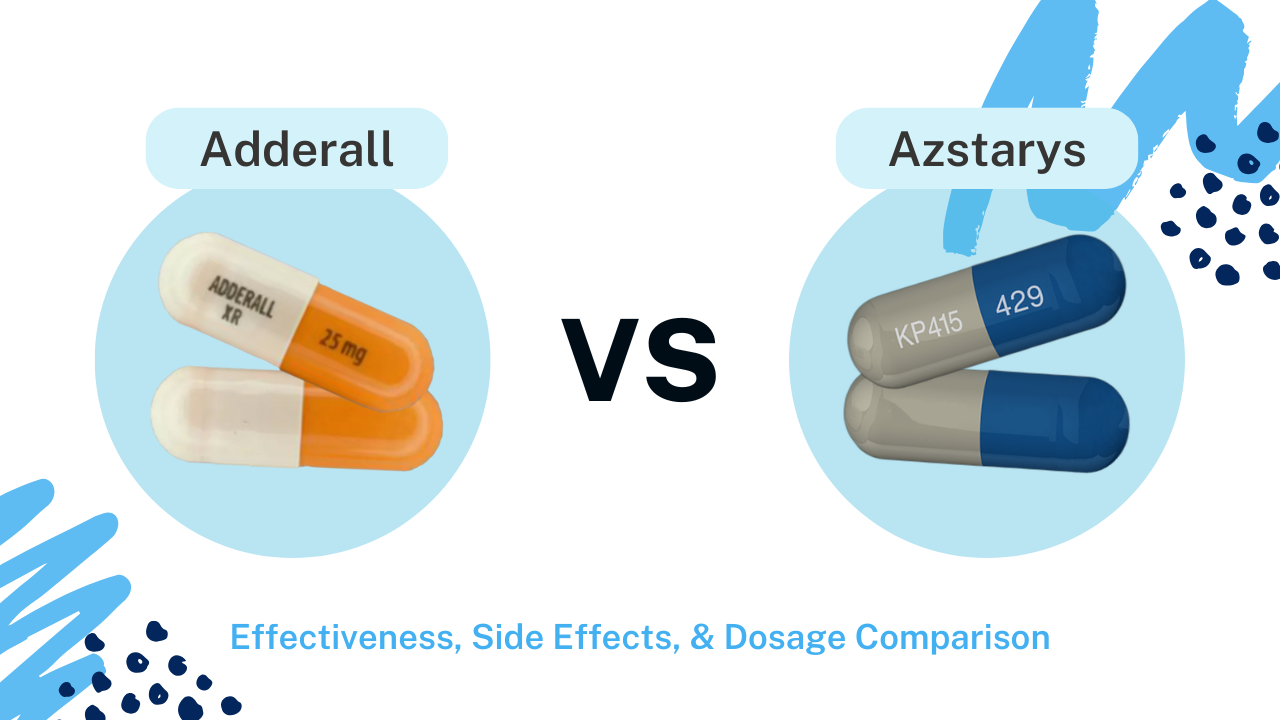
- Azstarys and Adderall XR are both FDA-approved stimulants that target dopamine and norepinephrine, but they use different active ingredients, Azstarys uses methylphenidate, while Adderall uses mixed amphetamine salts, which leads to meaningfully different experiences throughout the day.
- Azstarys is designed for a gradual, continuous release lasting around 13 or more hours, making it better suited for people who struggle with afternoon crashes, mood swings, or the sharp "on/off" feeling that can come with Adderall XR's two-phase release.
- Both medications share a similar side effect profile, including dry mouth, reduced appetite, anxiety, and sleep disruption, though Adderall tends to produce stronger peaks and more noticeable mood drops as it wears off, while Azstarys may cause more initial nausea.
- Cost and access differ significantly: Azstarys is brand-name only at roughly $400, 500 per month without insurance, while Adderall XR has generic versions available for as little as $50 per month, making it the more budget-friendly option for many people.
- Switching ADHD medications is common and typically doesn't require a washout period, but it works best when you track symptoms closely and follow up with your prescriber within two to four weeks to assess side effects and dosage. Start My Screening
You’ve tried coffee, planners, deep breaths — and maybe a few ADHD meds — but something still feels off. Either you’re getting side effects that don’t seem worth it, crashes that take half your day, or anxiety is taking over.
If that’s the case, it might be time to consider trying a new ADHD medication. Read on to learn about one of the newer ones on the market, Azstarys, and how it compares to one of the most common ones out there — Adderall.
What Are Azstarys and Adderall?
These are FDA-approved medications for ADHD in adults and children 6 and up. While they’re each stimulants that target dopamine and norepinephrine, they have different active ingredients. Their main goal, however, is the same: to improve levels of these neurochemicals so you can focus and feel more motivated to do the tasks you don’t really want to do.
Overall, better dopamine function lets us tie tasks to their reward better, increasing motivation. Norepinephrine is what keeps you going and paying attention.
Let’s dive into the differences of how these feel in your body, and why.
How Adderall Works
Adderall is typically the first ADHD medication prescribed because it’s been around for so long, with good efficacy rates. Unlike Azstarys, it uses mixed amphetamine salts, and the extended release (XR) formulation has a two-phase release system. That means you get one big hit soon after taking it, and another smaller one a few hours later. It’s designed to last anywhere from 10 to 12 hours, but it depends on the person.
The reason why you’ll feel a stronger hit is that amphetamines block the reuptake of dopamine and norepinephrine (so that more stays in your brain synapses, ready for use) — while also actively pushing for more to be released. It’s almost like a stronger dose, but that also means a bigger drop once the meds wear off.
How Azstarys Works
Azstarys is a newer ADHD medication (FDA-approved in 2021). It was developed to solve the common problems people have with older stimulants like Adderall or Ritaline: high peaks, afternoon crashes, and a big “on” and “off” feeling instead of smooth focus throughout the day.
Rather than using amphetamines, it uses methylphenidates. This is because they can have a more gradual effect on dopamine and norepinephrine. Methylphenidate blocks the reuptake of these neurochemicals alone, while Adderall both blocks the reuptake and promotes their release (an extra push).
Its once-daily XR formula also releases the medication slowly over the day, rather than in two bursts like with Adderall XR.
After you take the capsule, you get some of the medication released right away. Then, the rest dissolves slowly, for a more natural energy curve. That means you can get through your day without a lunch-time crash and need for a second dose. It’s meant to last around 13 hours or more, with a slow drop-off.
Main Differences Between Azstarys and Adderall XR
Here’s a breakdown of all the main differences between the two:
Comparing Effectiveness for Daily ADHD Symptoms
While knowing how they work is important, understanding what their function means for your daily life can make more sense. Here’s how exactly the two differ in how they might feel in your day:
Side Effects: What to Expect
The benefits might sound great, but there are still side effects to take into account. There’s no way to say for certain how you’ll feel on each one, but here’s what’s possible with both stimulants:
- Dry mouth
- Headaches
- Mood changes
- Upset stomach
- Trouble sleeping
- Low appetite, weight loss
- Nervousness, irritability, anxiety
- Increase heart rate and blood pressure (particularly for pre-existing heart conditions)
In general, one of the main side effects of Adderall is that it might suppress your appetite more. Since it has stronger peaks, it can also create bigger mood swings as it wears off.
Azstarys might cause more nausea or stomach upset initially, but overall, it should have a smoother wearing-off effect.
Who Shouldn’t Take Stimulants?
Keep in mind that stimulants interact with other medications and aren’t recommended for certain groups of people. This includes:
- Those taking certain antidepressants (especially MAO inhibitors)
- People with serious heart conditions or high blood pressure
- Individuals with severe anxiety, agitation, or certain psychiatric conditions
- Those with substance use disorder (or a strong family history)
Always tell your doctor about any supplements you're taking, and any physical issues you might have. Dive into your family’s health and substance use history as well, since stimulants are tied to misuse. The FDA includes a black box warning for their high potential for abuse, dependence, and overdose.
Cost and Access
Azstarys and Adderall XR can have a big range in both cost and access. Since Adderall XR has been around for longer and comes with generic options, there tends to be more availability and economical options. Here’s a look at their differences:
Azstarys
- Brand-name only; no generic options
- Around $400-500/month (without insurance)
- Manufacturer assistance programs available
Adderall XR
- The brand-name has a higher cost, $200 to $400 plus/month (without insurance)
- More affordable generic versions at $50/month or less
- Insurance coverage is generally better for generics
Switching Between Medications
Since ADHD meds can be so hit and miss, it’s common to switch and try new ones. Many people even say that generic brands give them totally different side effects than the brand name. In the end, it’s always hard to say how you’ll feel without giving it a try.
If you’re feeling like your medication isn’t doing what it should, let your doctor know. Tell them about your symptoms, goals, and lifestyle. There usually isn’t an in-between period where you need to wean off one before switching to another, either (also called a washout period). With your doctor’s go-ahead, you can switch medications and track the effects over a few weeks. It’s best to meet with them again within 2-4 weeks to check for side effects and if your dosage needs a change.
Making Your Decision
Not sure which ADHD med is best for you? You’re definitely not alone. That’s why ADHD Advisor uses clinicians experienced in ADHD, so you can talk to someone who completely knows the ins and outs of the meds available.
Questions to Ask Your Provider
Let your clinician know everything you can about your lifestyle, needs, and expectations from medication. Here’s what to ask when you’re in your appointment:
- How will it work for my schedule?
- What side effects can I expect?
- Will it fit my main need?
- How will I know if it’s working?
- What can I use to measure progress?
How ADHD Advisor Can Help
You can get the process started easily with a same-day virtual assessment. Fill out a quick intake form to schedule your appointment today.
You can ask them anything about your concerns and needs, and come to a decision. From there, you’ll get your complete ADHD treatment plan, which can also include regular therapy and potentially medication.
Keep in mind that prescriptions are made at the full discretion of your clinician. Also, stimulants aren’t available online with ADHD Advisor in every state. Check your state-specific page to find out what’s possible in your area.
FAQs
What is the difference between Azstarys and Adderall?
Azstarys is a newer methylphenidate-based stimulant with a more gradual release than Adderall — which is amphetamine-based.
Is Azstarys better than Adderall for ADHD?
Neither is technically better than the other; it all depends on your biology, lifestyle, and needs.
How long does Azstarys last compared to Adderall?
Azstarys lasts around 13 hours with a smoother, more gradual release than Adderall XR — which lasts 10-12 hours.
What are the side effects of Azstarys vs Adderall?
Both can cause dry mouth, headaches, nausea, anxiety, irritability, and mess with your sleep and appetite. Azstarys can have fewer peaks and crashes, while Adderall can have a stronger effect and mood swings after it wears off.
How much does Azstarys cost compared to Adderall?
Azstarys is brand-name only, making it around $400–500 monthly without insurance. The Adderall brand is similarly expensive, but it also comes in a generic form, which could be around $50 a month without insurance.
Bottom Line: Azstarys vs Adderall
Both medications are FDA-approved stimulants that can work well for ADHD. However, which one suits you best takes reflection on your needs and an honest conversation with your clinician.
There’s no way to say for certain which will help you most with the fewest side effects, but with some research and your clinician’s help, you’ll get the support you need on your journey. And if you’re not happy, you can always switch.
Curious to talk with a licensed clinician about trying a new ADHD medication? Get started by filling out the online questionnaire with our “Get Started” button and meet with a doctor today.