.svg)


ADHD assessment?
- Vyvanse and Adderall are both FDA-approved stimulant medications for ADHD, but they work differently: Vyvanse is a prodrug that converts to dextroamphetamine after absorption, producing a gradual, long-lasting effect (10, 14 hours), while Adderall is a mixed amphetamine salt available in both immediate-release (4, 6 hours) and extended-release (8, 12 hours) forms.
- Vyvanse tends to cause fewer mood swings, crashes, and rebound irritability than Adderall because of its slower, steadier onset, making it a potentially better fit for people with anxiety or emotional sensitivity, while Adderall's faster onset and flexible dosing formats may suit those who need quicker symptom control or more scheduling flexibility.
- Vyvanse carries a lower abuse potential than Adderall because its prodrug design makes it harder to misuse; both are Schedule II controlled substances, but individuals with a history of substance use may be better suited to Vyvanse.
- Neither medication is universally stronger or more effective, the right choice depends on your metabolism, lifestyle, coexisting conditions, and how your body responds, which is why a supervised medication trial with a licensed provider is the recommended path to finding the best fit. Start My Screening
Many adults with ADHD struggle to find the right medication, as there are so many options today that it can feel overwhelming. Vyvanse vs Adderall are two of the most commonly prescribed ADHD medications used to treat children and adults with ADHD. Both are CNS stimulant medications that enhance norepinephrine and dopamine, but they function quite differently in the body.
Choosing the right medication is crucial because it can significantly impact your focus, mood, and daily life. ADHD Advisor is committed to helping patients gain access to the ADHD treatments that are the best for them.
This guide will help adults with ADHD or caregivers considering Vyvanse vs Adderall and understand their differences to make informed decisions.
Vyvanse vs. Adderall: What Are They?
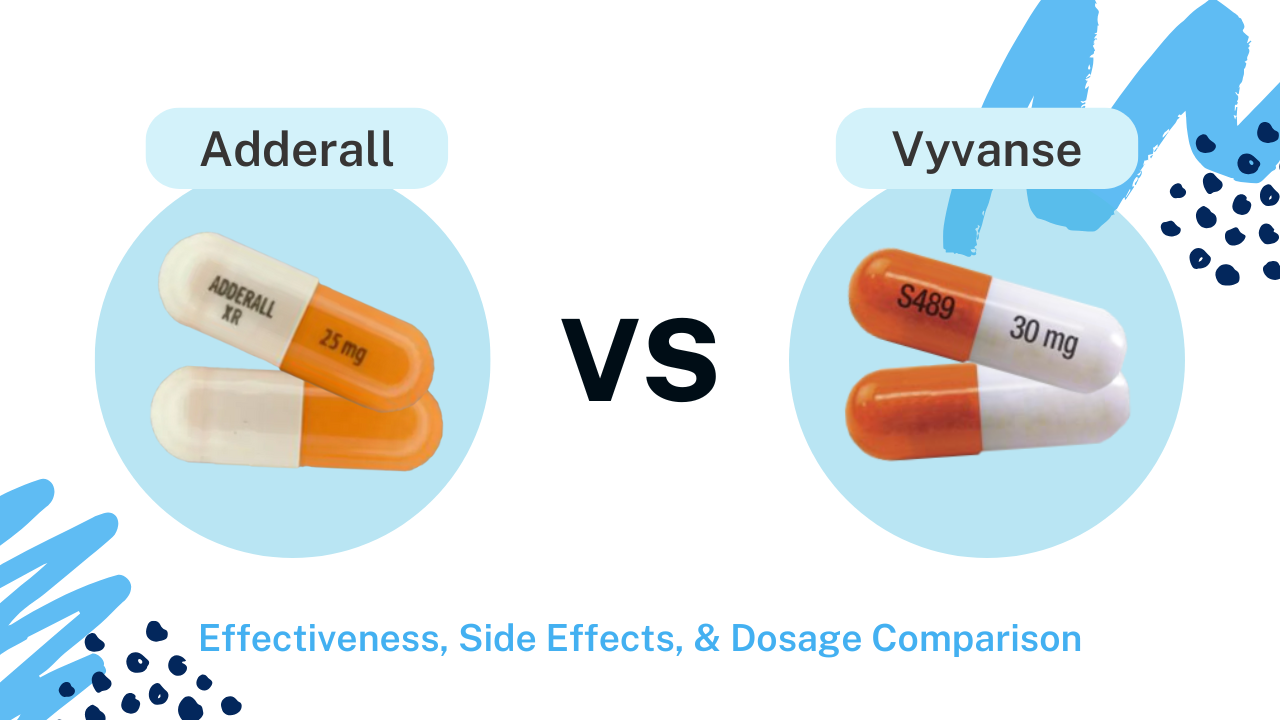
Vyvanse and Adderall are both FDA-approved stimulant medications that treat ADHD. Let's compare their chemical makeup and mechanism of action.
Vyvanse
Vyvanse is the brand name for the drug lisdexamfetamine dimesylate. It is a prodrug, meaning that it isn't active until the body metabolizes it, and then it converts into dextroamphetamine after it's absorbed. Dextroamphetamine is a CNS stimulant that helps with ADHD symptoms, including inattention, focus issues, impulse control, and hyperactivity.
Vyvanse is FDA-approved to treat ADHD in children ages 6 and older and adults. It is also prescribed to treat patients with binge-eating disorder.
As a long-acting stimulant medication, Vyvanse is inactive until it is metabolized, which takes about 1 to 2 hours.
Once it is converted to dextroamphetamine in the body, Vyvanse aids the brain in utilizing norepinephrine and dopamine, two neurotransmitters that help regulate ADHD symptoms. Many users report that Vyvanse produces a smoother onset of effects that last all day, making it ideal for busy individuals or those who are sensitive to the rapid onset of other ADHD medications.
Adderall
Adderall is the brand name for a drug that combines amphetamine and dextroamphetamine in a mixed salt formula. It is a CNS stimulant medication that is FDA-approved to treat ADHD in children ages 3 and older, adolescents, and adults. It is also used to treat narcolepsy in children 12 and older and adults.
Adderall is available in two forms: extended-release capsules (Adderall XR) and immediate-release tablets (Adderall IR). Adderall IR is often taken two to three times a day, whereas the extended-release is a once-a-day medication. The IR formulation begins working within 30 minutes to an hour, while the ER version can take 1 to 2 hours to start feeling effects.
Both of these ADHD medications help to increase dopamine and norepinephrine in the body and use a similar mechanism of action, but they differ in how quickly they work and how long they last.
Key Differences Between Vyvanse and Adderall
Vyvanse vs Adderall are both CNS stimulant medications used to treat ADHD, and are both classified as a Schedule II controlled substance by the DEA, but they do have a few key differences to consider.
Type
Vyvanse and Adderall are both stimulant medications, but they are different types of drugs. Vyvanse is a prodrug that converts to dextroamphetamine in the body as it is absorbed. Adderall is a mixed amphetamine salt formulation that is available in both immediate and extended release.
Release Format
Vyvanse is available only in a long-acting form, as its prodrug effects stabilize over time. In contrast, Adderall comes in both long-acting and short-acting formulations.
Long-acting formulas are ideal for once-a-day dosing, while short-acting formulas are useful for achieving quick effects. Adderall is available in both extended-release (XR) and immediate-release (IR) formulations, offering greater scheduling flexibility than Vyvanse.
Duration
Vyvanse usually lasts 10–14 hours. Adderall XR lasts around 8–12 hours, and Adderall IR lasts between 4–6 hours.
Peak Effects
Effects from Vyvanse start to peak gradually. Effects are faster with Adderall.
Abuse Potential
Vyvanse is typically seen as having a lower abuse potential due to the delayed mechanism of action. Adderall has a greater abuse potential, especially the immediate-release form. Vyvanse's prodrug formula makes it more difficult to misuse.
Both medications carry a risk for developing a substance use disorder, and if you have a history of substance use, Vyvanse may be a safer option.
Approved Use
Vyvanse is FDA-approved to treat ADHD and binge-eating disorder. Adderall is FDA-approved to treat ADHD and narcolepsy.
Vyvanse vs. Adderall Dosage: How They Compare
When comparing Vyvanse vs Adderall, let’s examine the common dosages for both medications and a basic dosage conversion.
Vyvanse vs Adderall Dosing Basics
Vyvanse
Vyvanse is taken once a day and is available in the following strengths:
- 10 mg
- 20 mg
- 30 mg
- 40 mg
- 50 mg
- 60 mg
- 70 mg
- 10 mg
- 20 mg
- 30 mg
- 40 mg
- 50 mg
- 60 mg
Vyvanse dosage usually starts at 10-20 mg, and the maximum dose is 70 mg per day.
Adderall
Adderall is available in various dosages to help clinicians determine the correct dose for each individual. Adderall IR is designed to be taken two to three times a day and starts working right away. The available Adderall IR tablets strengths are:
- 5 mg
- 7.5 mg
- 10 mg
- 12.5 mg
- 15 mg
- 20 mg
- 30 mg
Adderall IR is usually started at 5 to 10 mg once or twice a day.
Adderall XR is formulated to be taken once a day and offers a delayed-release mechanism to release the medication slowly throughout the day. Adderall XR comes in the following dosages:
- 5 mg
- 10 mg
- 15 mg
- 20 mg
- 25 mg
- 30 mg
Adderall XR is only taken once a day and is usually started at 5 mg and titrated as necessary.
Vyvanse vs Adderall Dosing Conversion Chart
Are you considering switching from one of these medications to the other? Let's take a look at a dosing chart. These conversions are not exact, and only a licensed clinician can accurately help you transition. ADHD Advisor's clinicians can safely help you switch from Vyvanse to Adderall or vice versa.
5 mg of Adderall XR is generally equivalent to 20 mg of Vyvanse. 10 mg of Adderall XR is about the equivalent of around 30 to 40 mg of Vyvanse. 20 mg of Adderall XR is about the same as 50-60 mg of Vyvanse. 30 mg of Adderall XR is approximately equivalent to 70 mg of Vyvanse.
Many factors can determine how a drug works in the body, including metabolism, absorption rates, and the duration of its effects. So it's advisable to discuss dosage concerns with your medical professional to ensure a safe transition.
Vyvanse vs. Adderall for Mood: Which Is Smoother?
Let’s see which is better for mood: Adderall vs Vyvanse.
Vyvanse Provides Consistent Symptom Relief
Vyvanse is often considered to be "smoother" in mood effects because there are fewer mood swings or "crashes" due to its gradual onset of effects. This gradual release tends to lead to more consistent symptom relief throughout the day. While Vyvanse effects last longer, some patients may experience sleep issues, particularly if taken later in the day.
Adderall Offers More Flexibility
Adderall offers more flexibility, but since effects are faster and don't last as long, there is potential for mood swings or emotional rebounding, especially in the afternoon. It may also lead to some irritability or tearfulness, especially between doses or after the effects wear off.
It Depends on Your Body Chemistry
For patients who have emotional sensitivity, depression, or anxiety, Vyvanse may be better tolerated because of its smoother experience. However, some people may feel more energized or motivated on Adderall. It really depends on your unique body chemistry as to which one works best for you.
You can discuss any anxiety or emotional concerns with your licensed provider. At ADHD Advisor, we can work with you to determine which medication provides the best symptom relief with the least mood swings safely.
Vyvanse vs. Adderall Side Effects
Let's go over the physical and emotional side effects of Vyvanse vs the side effects of Adderall.
Physical Side Effects
Vyvanse and Adderall have similar side effect profiles, as they are both stimulant medications with similar mechanisms of action. However, there are differences in how the effects occur in the body, as Adderall and Vyvanse have different delivery methods. Let's look at some of the common physical side effects of each medication.
Vyvanse
Some of the common side effects from taking Vyvanse include:
- Insomnia
- Dry mouth
- Headache
- Appetite loss
- Nausea
- Dizziness
- Diarrhea and constipation
Adderall
Some of the common side effects of Adderall include:
- Insomnia
- Dry mouth
- Headache
- Appetite loss
- Nausea
- increased heart rate
- Sweating
Emotional & Behavioral Side Effects
Both Adderall and Vyvanse can cause behavioral and emotional side effects. The main differences are related to the drug delivery process. Vyvanse tends to have smoother mood and behavioral side effects thanks to its slower release in the body. Adderall can cause rapid changes in mood or irritability because its effects are felt fast and don't last very long.
Mood Swings
When comparing the Vyvanse vs Adderall mood effects, mood swings are less likely with Vyvanse because of the slower delivery of the drug into the body. Adderall may cause more mood swings, especially with the immediate-release version, because of the rapid onset of effects. Some people with emotional sensitivity may prefer Vyvanse to Adderall.
Rebound Irritability
Rebound irritability is much more common with Adderall, especially the IR version. Because Vyvanse is slow-acting and long-lasting, it provides more consistent effects. Adderall has a quick onset, and its effects wear off after a few hours, which can potentially lead to irritability once the medication fades.
Anxiety
Adderall is more likely to cause an increase in anxiety than Vyvanse. If you have anxiety concerns, you may want to start with Vyvanse and see how it affects you before starting Adderall.
Although each medication will affect everyone differently, the only real way to know how it's going to affect you is to work with your clinician in a trial-and-error process to find what works best for your chemistry.
Crashes
Vyvanse is less likely to cause "crashes" because it lasts all day. Adderall is taken two or three times a day to help effects last longer, but there are still some risks with crashes or jitters when the drug wears off. Of course, working with a provider to find the correct dosage may help to alleviate these symptoms.
Vyvanse vs. Adderall for Weight Loss
When comparing Vyvanse vs Adderall for weight loss, both medications can cause appetite suppression, so there is potential for weight loss with either. However, only Vyvanse is FDA-approved to treat eating conditions such as binge-eating disorder.
Adderall may be prescribed off-label for weight loss or eating disorders, but it is not a common practice, as Adderall IR can lead to rebound eating after the medication wears off. Vyvanse is sometimes used off-label for appetite control, too, and typically doesn't lead to rebound eating because its effects last all day.
If you are having any weight changes or concerns, it's imperative that you discuss them with your clinician to determine the best course of action.
Which One Is More Effective?
When comparing Vyvanse vs Adderall, you may wonder which one is more effective. The answer is that there is no "universal" most effective ADHD medication. Individuals vary greatly, and medication affects everyone differently. Ultimately, it depends on which medication is most effective for your unique chemical makeup and metabolism.
It also depends on your lifestyle and daily routine. Some people may prefer a once-a-day medication that they can take and experience consistent all-day symptom relief. Others may prefer a faster onset of effects. It really depends on your life and symptoms as to which is best for you.
You and your provider will also consider coexisting conditions like anxiety or sleep issues. So if you have anxiety, you may do better with the smoother onset of Vyvanse. However, if you have sleep issues, you may do better with Adderall because its effects last shorter, and you have more control over when they wear off.
Some people report experiencing better focus with Adderall. Others say that Vyvanse offers more consistent symptom relief and that it feels more predictable.
You may experience side effects differently, and one may produce fewer than the other. You will want to work with a provider to determine the best ADHD medication and dosage for you and your lifestyle.
Choosing the Right Medication for You
When comparing Adderall vs Vyvanse, you want to ask yourself a couple of important questions before you speak with your clinician. You should ask yourself the following questions:
- Do you need fast flexibility (Adderall IR) or all-day symptom relief (Vyvanse)?
- Do you have a prior history of anxiety, mood swings, or crashes?
- Are you sensitive to appetite changes or rebound fatigue?
After you have really considered these questions, it's recommended that you consider a medication trial under the supervision of a licensed provider. Working with a healthcare professional can help you try out an ADHD medication and see how it works, and if you experience unwanted effects, then your provider can start you on another medication.
Both Adderall and Vyvanse are frequently prescribed, and patients find relief with both medications. You may benefit more from one than the other. The only way to find out is to work with your healthcare provider.
ADHD Advisor Can Help You Decide (and Prescribe)
There are many ADHD medications out there to choose from, and while it may seem overwhelming, you can work with a provider to find the best fit for you. ADHD Advisor can help you determine whether you respond better to Vyvanse vs Adderall. ADHD Advisors connects you with licensed providers who:
- Can evaluate your ADHD and any coexisting disorders
- Offer personalized, unique treatment plans that fit your life
- Prescribe Vyvanse, Adderall, or an alternative online prescription based on your needs
- Monitor your progress and adjust medications safely to ensure your treatment is a success
FAQs About Vyvanse and Adderall
Is Vyvanse stronger than Adderall?
No, neither Vyvanse nor Adderall is stronger than the other. It really depends on duration and steadiness, not intensity, to determine which medication is best for you.
Which causes more mood swings?
Adderall, especially Adderall IR, is associated with a higher risk of mood crashes.
Can you switch from Adderall to Vyvanse?
Yes, you can switch from Adderall to Vyvanse, but the dosage must be carefully adjusted by a licensed provider.
Do both medications cause weight loss?
Yes, both Adderall and Vyvanse can cause appetite suppression. However, side effects vary from person to person, so it just depends on how it interacts with your body chemistry.
Final Thoughts
When comparing ADHD medications like Vyvanse vs Adderall, you need to remember that there is no universally best one, but there is one that will work best for you. Vyvanse and Adderall are both powerful, evidence-backed treatments for ADHD. Your ideal choice will depend on your brain, body, and lifestyle.
Vyvanse will provide a smoother, all-day coverage, while Adderall will be a bit more flexible with scheduling and provide faster relief.
ADHD Advisor can help you find the best ADHD medication for you. If you're unsure or want to switch safely from one medication to the other, we can help! Just take out a quick quiz to get started, and one of our licensed professionals can help you determine if Adderall vs Vyvanse is the best fit for you.