
.svg)


ADHD assessment?
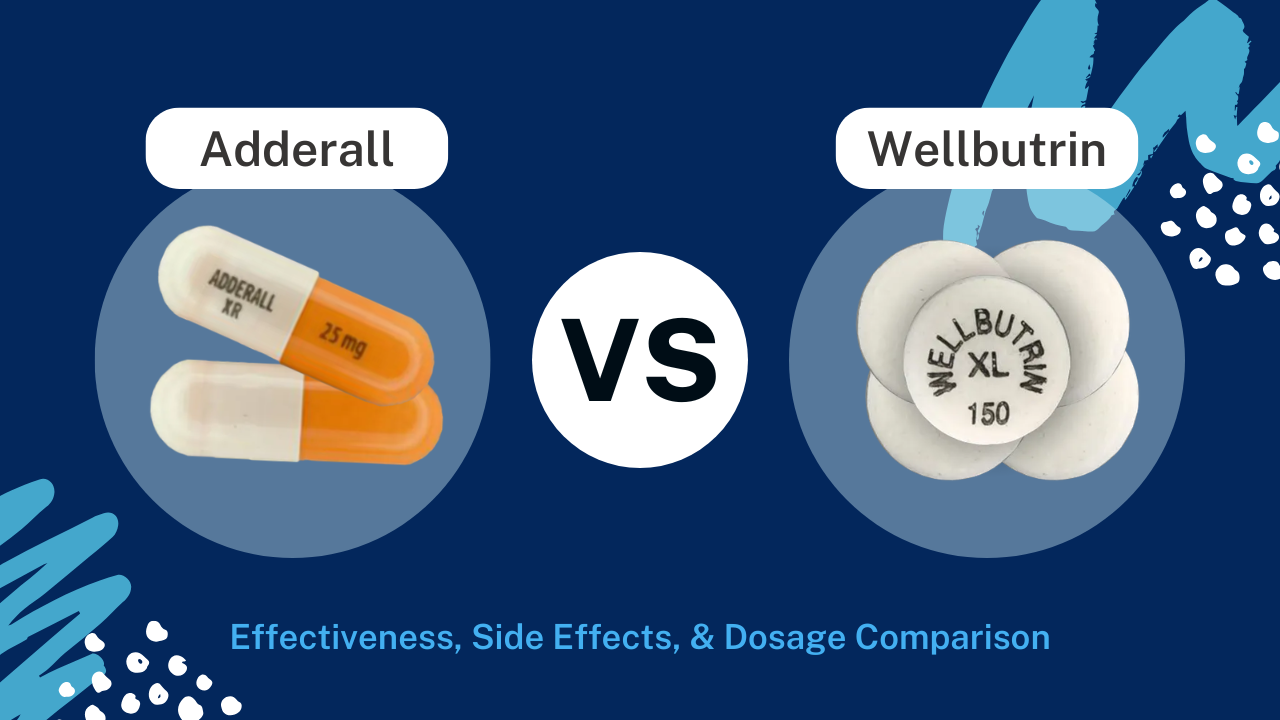
- Adderall is an FDA-approved stimulant that works within 30, 60 minutes to reduce ADHD symptoms like inattention, hyperactivity, and impulsivity, while Wellbutrin (bupropion) is a non-stimulant antidepressant used off-label for ADHD that takes 2, 4 weeks to build up and show results.
- Adderall is generally considered more effective for ADHD and is a first-line treatment, but Wellbutrin is a clinically supported alternative, one study found a 42% reduction in ADHD symptoms, particularly for people who have co-occurring depression, a history of substance use disorder, or who can't tolerate stimulants.
- Both medications share some overlapping side effects like dry mouth, trouble sleeping, and weight loss, but they carry distinct risks: Adderall has a higher potential for misuse and physical dependence as a controlled substance, while Wellbutrin carries a rare but serious risk of seizures.
- Generic versions of both medications are available and can cost as little as $6, $40 per month depending on insurance, pharmacy, and discount programs, and while Adderall is FDA-approved for ADHD and Wellbutrin is off-label, both are typically covered by insurance, though either may require prior authorization.
- There is no universally "best" ADHD medication, the right choice depends on your symptom severity, medical history, and individual response, and finding the most effective treatment often involves some trial and error under a licensed clinician's guidance. Start My Screening
Understanding the Basics: What Are Wellbutrin and Adderall?
Living with attention-deficit/hyperactivity disorder (ADHD) is challenging, and comparing ADHD medications can feel even more overwhelming since there are so many options today.
Wellbutrin vs Adderall are both commonly prescribed ADHD treatments. Both of these medications can help manage ADHD symptoms, but they have many differences.
This comprehensive ADHD medication comparison guide will break down the key differences between Wellbutrin vs Adderall so you can learn more about your options before you meet with a licensed clinician.
What Wellbutrin Is and How It Works
Wellbutrin (bupropion) is an antidepressant medication that is sometimes used "off-label" for patients with ADHD. Off-label simply means that it is specifically FDA-approved to treat a certain condition, but doctors have seen success with it and may prescribe it for something else.
It's classified as a norepinephrine-dopamine reuptake inhibitor (NDRI). It works by increasing the levels of two brain chemicals, norepinephrine and dopamine. Norepinephrine and dopamine also play a role in individuals with ADHD, which is why Wellbutrin can help patients with ADHD.
Bupropion for ADHD may help with symptoms of inattention and focus, but it does take several weeks to build up in the system before you will see results. As a non-stimulant ADHD medication option, Wellbutrin can be a successful alternative to Adderall, which some people can not take or do not respond well to.
What Adderall Is and How It Works
Adderall is a first-line stimulant drug used to treat ADHD. It is FDA-approved to treat ADHD in adults and children ages 6 and older. Adderall is also used to treat narcolepsy in adults.
Adderall works quickly to increase the levels of dopamine and norepinephrine in the brain, allowing for fast symptom relief. Within an hour, you should start to see symptom relief in areas of focus and attention, as well as hyperactivity.
Adderall contains amphetamine, which is a CNS stimulant medication. Stimulant medications are classified as controlled substances due to the potential for abuse.
Adderall is available in two formulations: immediate-release and extended-release. The immediate-release begins working in the body right away and can last 4 to 6 hours. The extended-release takes about an hour to kick in and can last 8 to 12 hours.
The Main Differences Between Wellbutrin and Adderall
Now, let's compare Wellbutrin vs Adderall in more depth and look at some significant differences between them. Neither Wellbutrin nor Adderall is "better" than the other, but they both can offer symptom relief for people living with ADHD. So let's go over the practical differences between Wellbutrin vs Adderall that matter the most to patients.
How Quickly They Start Working
Adderall is fast-acting, and the immediate-release version can start to work in as little as 30 minutes to an hour. In contrast, Wellbutrin usually takes at least 2–4 weeks to start noticing any improvements. It has a more gradual effect on the body, as it needs time to build up before you start to see results.
So for individuals who need immediate relief from their symptoms, Adderall may be the preferred option. However, if your main goal is long-term management, Wellbutrin and Adderall are both good options, as they offer long-term symptom management benefits.
Effectiveness for ADHD Symptoms
Adderall is highly effective for most people with ADHD. Data from various studies found that Adderall was effective for symptoms of aggression, hyperactivity, impulsivity, and inattention. Adderall has been extensively studied and is considered a first-line treatment for ADHD.
Recent research shows that Wellbutrin can help with ADHD symptoms. Although considered less effective than stimulants, Wellbutrin is a non-stimulant ADHD medication that may work better for those with milder symptoms or who can not take stimulants.
Some people respond very well to Wellbutrin. This study found a 42% reduction overall in ADHD symptoms in adults at the end of the 6-week trial period while taking Wellbutrin.
Stimulant vs Non-Stimulant: What This Really Means
Let's look at stimulant vs non-stimulant ADHD medication and why the distinction matters.
Stimulants
Stimulants work faster in the body for managing ADHD symptoms. However, they are controlled substances due to their misuse potential. Stimulant medications tend to increase heart rate, decrease appetite, and exacerbate certain mental health conditions. They are not to be taken with MAO inhibitors.
Non-stimulants
Non-stimulants take longer to see results and can start working in a few weeks. They have a lower abuse risk and a different side effect profile than stimulants. Non-stimulants may cause drowsiness, stomach issues, or headaches. For individuals with a history of substance use disorder, those taking MAO inhibitors, or people who have not responded well to stimulants, non-stimulant options are often considered a second choice.
Side Effects: What to Actually Expect
Side effects are always a significant concern for people who are starting new medications. Some side effects do go away or ease up after your body gets used to the medicine. It's vital that you let your doctor know about any side effects that you are experiencing. Sometimes, if side effects do not go away on their own, your healthcare provider can decide to switch you to a different ADHD medication.
Trial and error are a normal part of the treatment process. Everyone is different and will experience medications differently. Let's compare the side effects of Wellbutrin vs Adderall.
Common Side Effects of Adderall
Let's go over the most common Adderall side effects. Adderall users report the following common side effects:
- Decreased appetite
- Weight loss
- Trouble sleeping (especially if the dose is taken too late)
- Headaches
- Dizziness
- Feeling jittery or nervous
- Dry mouth
- Stomach upset
- Increased heart rate
- Mood changes
Some serious side effects of Adderall can include new or worsening mental health conditions, including psychosis, or cardiac and circulatory problems. If you experience any serious side effects from Adderall use, report it to your provider right away.
Often, after the first few weeks of taking Adderall, many of these side effects do go away with continued use.
Tips for Managing Side Effects
To help manage symptoms, ensure you take your doses early and plan your meals around them. Eat when you are hungry enough, typically in the evening when the medication wears off.
Always stay hydrated on stimulant medication; drinking enough water will help you avoid dry mouth and headaches. To reduce nervousness, limit caffeine intake, and practice mindfulness techniques such as deep breathing or meditation.
Common Side Effects of Wellbutrin
Some common Wellbutrin side effects include:
- Dry mouth
- Trouble sleeping
- Nausea
- Headaches
- Anxiety or trembling
- Sweating
- Weight loss
Serious side effects can include seizures or new or worsening mental health conditions, including suicidal thoughts. These are rare side effects at normal doses, but it's important to tell your provider right away if you experience any serious side effects from taking Wellbutrin.
If any of these side effects persist after a few weeks, discuss them with your provider, who may adjust your dosage or try you on a different medication.
Cost and Insurance Coverage Differences
The cost of medication is a real concern for many people. Many Americans worry about not being able to afford their medication, which can lead to not taking doses properly or stopping treatment altogether. Insurance coverage may vary depending on your insurance plan.
Generics Are Available for Adderall and Wellbutrin
Both Adderall and Wellbutrin are available as generic options, which are usually more affordable than brand-name. You can find generic Adderall for $12 to $40 per month, especially with discount cards, coupons, or by shopping at pharmacies for the best price.
Generic Wellbutrin can cost as little as $6 per month with discount codes or coupons, and as much as $40 per month without codes or insurance.
Prices Vary Between Pharmacies
Even though Adderall is a controlled substance and may require prior authorization, it typically doesn't make it any more expensive than non-stimulant options. Prices vary from pharmacy to pharmacy, so you can always ask your provider to help you find a pharmacy near you that offers the best price if your insurance company doesn't cover your prescription.
Sites like GoodRX, SingleCare, and non-profit groups can help you get your medicine cheaper as well.
Insurance Coverage Considerations
When comparing Wellbutrin vs Adderall, one important factor to consider is insurance coverage. Since Adderall is FDA-approved for ADHD, insurance will usually cover it, usually preferring the generic version.
Wellbutrin for ADHD (off-label) is also usually covered, but since it's off-label, it may require a pre-authorization. Although Adderall may require a pre-authorization as well due to its potential for abuse, it really boils down to your specific insurance company's formulary.
You should go ahead and check with your insurance provider before starting any ADHD medication to see if it's covered. If it isn't covered, your provider can work with you to find a medication that is or at least is more affordable out of pocket.
Making the Decision: Which Medication Might Be Right for You?
Wellbutrin vs Adderall: Which is the best medication for you? You and your healthcare provider should work together to decide whether to start Wellbutrin or Adderall. There really is no universally" best ADHD medication for adults.
Everyone will experience ADHD a bit differently from others, and medication will affect them differently, too. You may not get it right the first time, either. Your provider may start you out on Adderall for ADHD, but you may not respond well, and they can switch you over to a different medication like Wellbutrin.
Healthcare providers want to make sure that you find the best fit medication for you, so it may take a little bit of trial and error before you find the one that resonates with you best.
Questions to Discuss With Your Provider
Here is a list of questions to ask your provider when considering Wellbutrin vs Adderall. These include:
- How severe are my ADHD symptoms?
- Do I have other conditions (depression, anxiety, substance use history) that might influence the choice?
- Am I concerned about stimulant medications?
- How quickly do I need symptom relief?
- What are my biggest concerns about side effects?
If you write down these questions and your answers, you can discuss them with your provider to help determine which medication to try.
Factors That Might Point Toward Adderall
Here are some factors that may point you and your provider to choosing Adderall over Wellbutrin.
Here are some reasons to consider Adderall. If you:
- Have more severe ADHD symptoms
- Are in need of a quick symptom relief
- Have had a previous unsuccessful trial of non-stimulants
- Have no substance use concerns
- Have no contraindications like heart conditions or taking MAOI's
Factors That Might Point Toward Wellbutrin
Some reasons you may be a better candidate for Wellbutrin include if you:
- Have mild to moderate ADHD symptoms
- Have co-occurring depression
- Have a history of substance use disorder
- Have any anxiety about taking stimulant medication
- Have a previous negative experience with stimulant medication
- Have a certain medical condition that would make taking stimulants risky
Understanding That Treatment Often Involves Trial and Error
The most important thing to remember when you're comparing Wellbutrin vs Adderall or any other ADHD treatment is that trial and error are simply a part of the process. Many people try more than one medication before they find out what works best for them. If the first ADHD treatment options you try do not work, don't get discouraged.
Everyone's brain chemistry is different, and your provider will work with you until you find the one that suits you best.
It's so important to be patient and keep the conversation open with your doctor so they can understand what's going on. They won't be able to help you find something different if you never let them know that it's not working right.
Getting Started With ADHD Treatment
Now that we've compared Wellbutrin vs Adderall, let's take a look at how easy it is to get started managing your ADHD symptoms. We know that starting treatment is a huge first step, but after that, you can finally breathe easier knowing that you're on the right track to having your symptoms managed properly. Let's look at how easy it is to get a professional diagnosis and treatment for ADHD.
Why Professional Diagnosis Matters
A proper diagnosis requires a comprehensive evaluation by a licensed clinician. The clinician will assess your symptoms to ensure that you are dealing with ADHD and not another mental health disorder. Many symptoms of ADHD overlap with other mental health conditions, and it's important to find the correct diagnosis.
Self-diagnosing yourself based on an internet search is not quite enough to make medication decisions. You'll want to get an evaluation and have a proper diagnosis, and then let your provider start you on medication the right way until you find what works.
How ADHD Advisor Can Help
ADHD Advisor provides comprehensive diagnosis and treatment for ADHD via telehealth. We even offer same-day virtual diagnosis and treatment. Stop wondering if you have ADHD—find out today with ADHD Advisor.
You can take our short test to qualify. After that, a licensed clinician will formally evaluate your symptoms and discuss ADHD medication options if necessary. Treatment includes ongoing support and monthly medication management. We make sure you schedule follow-up appointments and receive your online prescription at your pharmacy each month.
Virtual ADHD care is convenient and works around your schedule, so you don't have to miss work or school just to treat your ADHD.
Moving Forward With Confidence
Wellbutrin and Adderall are two treatment options for ADHD that many people have success with. We know that choosing an ADHD medication is an important decision, and that's why working directly with your healthcare provider is so vital.
They need to know about your schedule and lifestyle to help you see what type of medication is going to work for you. If you try one, and it doesn't work, then your provider will choose another medication.
Eventually, you will find what works for you, even if it takes a little while. No one should have to live with untreated ADHD. Let ADHD Advisor help you find the best treatment for your unique needs.
Frequently Asked Questions
What is the difference between Wellbutrin and Adderall?
The main difference between Wellbutrin and Adderall is that Wellbutrin is a non-stimulant medication, and Adderall is a stimulant medication. They work differently to manage symptoms of ADHD.
Which is better for ADHD: Wellbutrin or Adderall?
Adderall is a first-line treatment for ADHD. Wellbutrin is often prescribed off-label as a non-stimulant option for treating ADHD in individuals who aren't a great fit for stimulants like Adderall. Both successfully manage ADHD symptoms, and neither is "better" than the other.
Can you take Wellbutrin and Adderall together?
Yes, Wellbutrin and Adderall can be taken together, especially if you have ADHD and co-occurring depression. Your doctor must also feel that the benefits outweigh the risks, as these two together can pose risks, such as Serotonin Syndrome.
Is Wellbutrin a stimulant like Adderall?
No, Wellbutrin is not a stimulant like Adderall. Wellbutrin is an antidepressant.
What are the side effects of Wellbutrin vs Adderall?
The common side effects of Wellbutrin vs Adderall are similar. However, each has its own unique risks. Adderall has a great potential for abuse, and Wellbutrin has a higher risk of seizures.
How does Wellbutrin work compared to Adderall?
Wellbutrin works by gradually increasing dopamine and norepinephrine levels in the body. Adderall works by increasing the levels of dopamine and norepinephrine right away.
Is Wellbutrin or Adderall more addictive?
Adderall is considered to be more addictive than Wellbutrin, as it is a controlled substance with a high potential for abuse and physical dependence.
Does Wellbutrin work for ADHD?
Yes, Wellbutrin does work for many individuals with ADHD, especially those who can't take stimulants.
Which medication is safer for long-term use: Wellbutrin or Adderall?
Wellbutrin could be considered safer for long-term use, as it has a lower risk of abuse than Adderall. But it really depends on the person's body chemistry as to which one works best for them long-term.
How long does it take for Wellbutrin vs Adderall to work?
Adderall works right away, often in 30 minutes to an hour of taking it. Wellbutrin takes more time to gradually build up in the system, with symptom improvements showing up around 1 to 2 months.